Bingo, Beer, and a Reason to Wander
Kai·August 8, 2026

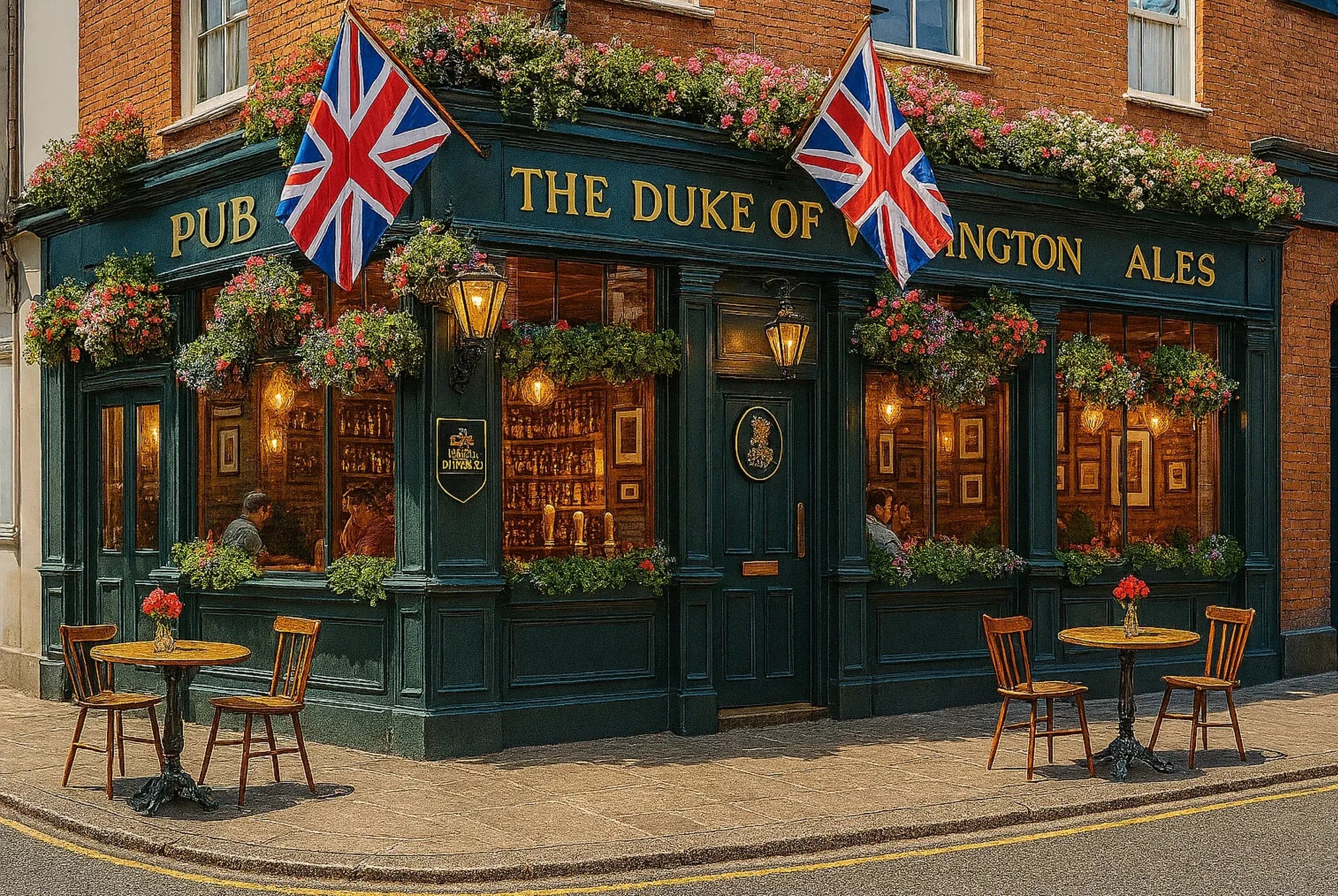
It started in Kamata, a workaday neighborhood in Tokyo’s Ota ward, the kind of place people usually pass through on their way to somewhere else. I was there for no real reason. Just one of those aimless Sunday afternoons where you pick a station you have never gotten off at, step onto the platform, and see what is there. After an hour of wandering, my feet hurt and I wanted a place to sit, eat, and drink. I spotted a pub called Hub. The name was so literal it almost looped back to charming. Inside, the place was all dark wood and amber light, walls painted to look like decades of smoke had passed through them, even though this particular location was strictly non-smoking. It felt like someone had tried to build a rainy London evening indoors and mostly succeeded. I ordered a HUB Ale, a beer brewed exclusively for the chain, and a bite-sized fish and chips, and I settled in.
At the register, the clerk offered me a membership card. Five hundred yen. I almost said no. Five hundred yen for a loyalty card at a pub I might never visit again? But she smiled and started listing the benefits: discounts, birthday coupons, digital stamps, and some kind of bingo game inside the app. It sounded gimmicky. It sounded like the kind of thing I usually ignore. But something about her enthusiasm disarmed me, and I handed over the coin. I took my drink, found a corner table, and spent a perfectly ordinary hour there. The ale was good, the fish and chips were crisp, and the fake-aged walls somehow did their job. By the time I left, the place had done what a good pub is supposed to do: it made me forget I had been tired.
On the train ride home, I opened the app and found the stamp page. A tiny illustrated mark sat there, confirming I had been in that specific Hub, on that specific evening. Below it: 1 out of 101. My first thought was, that is a lot of stores. Then I opened the map, and curiosity began to seep in.
The pins marking each store on the map were clustered around Tokyo, sure. But there were also dots across Kansai, a few in Fukuoka, some as far north as Sendai. This was not just a stamp card. It was a scavenger hunt wearing a loyalty program’s clothes. And the bingo feature doubled down on the idea: a board that refreshes every few weeks, each square a different Hub location. Order at a listed pub, fill the square. Get three in a row (across, down, diagonal) and earn a prize. Discounts, free snacks, digital currency you can spend at Hub or its fancier sibling brand, a bar simply called 82.
I did not think any of this would stick. But a few days later, I had a free evening and found myself opening the map again. There was a Hub near my station. I figured I would grab a drink, collect a second stamp, and see if the novelty held up. It did. Then I went back a third time. Then a fourth. And somewhere in there, without really deciding to, I had started.
I started small. In those first weeks, whenever I had a free evening, I checked the map. Meeting a friend in Shinjuku? There was a Hub near the east exit. I arrived thirty minutes early, ordered a half-pint, collected a stamp, and walked out feeling like I had gotten away with something. A rainy Tuesday with zero plans? I picked a Hub in Kichijoji I had never been to, sat at the counter, and left an hour later with stamp number five. Then ten. Then twenty. Each one felt like checking a box in a game only I was playing.
The stamps themselves kept me coming back. I noticed early on that no two were alike. Each one is a tiny love letter to its neighborhood. Ueno has Hub’s dragon-like mascot holding a beer with a panda in the background. Shibuya features Hachiko, the loyal dog whose statue stands a few minutes from the pub. Asakusa has a lantern and a sensu fan. Someone sat down and drew these. Someone who knows these neighborhoods and cares about them. They are not just proof of purchase. They are miniature souvenirs.
Somewhere around stamp thirty, the bingo board stopped being a background feature and became a strategy. A new board would drop, and I would scan it eagerly. Two squares already filled by coincidence? The third became a mission. I learned which stations had Hubs near which exits, which ones got crowded on Friday nights, which ones had the best counter seats for a solo visitor. It was low-stakes, but it was not meaningless. It gave shape to evenings that might otherwise have dissolved into scrolling on my phone.
Then a friend suggested a weekend in Osaka. And my first thought, I am slightly embarrassed to admit, was not about the castle or the food. It was: how many Kansai Hubs can I knock out in two days? We mapped a route through Namba, Umeda, Shinsaibashi. At each stop we ordered something different: a pint, fried chicken, a whiskey highball. The stamps stacked up. But more than that, each pub gave us a place to rest and talk between sightseeing. The stamps became the rhythm of the trip, a kind of punctuation mark between destinations.
The furthest I have gone for a stamp is Sapporo. I was there in winter anyway, for the snow festival and the seafood and all the usual reasons people visit Hokkaido in February. But on my second night, with the temperature well below zero and snow piling up on the sidewalks, I trudged through Susukino looking for the Hub. Inside, it was warm and full of people and smelled exactly like the one in Kamata. The stamp from that night shows a snow-covered Susukino street scene, and it is still one of my favorites. It reminds me of the cold walk, the way my glasses instantly fogged up at the door, and how unreasonably good hot fish and chips taste after an hour in the snow.
Each stamp carries a story. The one from Ikebukuro reminds me of the retired schoolteacher I met at the counter, who told me he had been coming to that same Hub every Thursday for fifteen years. The Yokohama stamp is tied to an evening spent watching rugby with strangers whose names I never learned, shouting at the screen together like old friends. The Susukino stamp holds snow and warmth and the strange comfort of finding a familiar pub at the far end of the country.
Since that first night in Kamata, the chain has grown to 109 stores, and I now hold over 90 stamps. A handful remain. A couple are in cities I have not yet had a reason to visit. And that is the quiet genius of the whole thing: it keeps a few stamps just out of reach, just far enough to make you think, well, I have never been to Nagoya.
The marketing behind it is clever, but it never feels pushy. A modest fee, a playful digital collectible, and a mechanic that nudges you to explore on your own terms. It transformed a one-off stop into a hobby that gives meaning to travel that might otherwise feel routine. It gave me reasons to detour into neighborhoods I would have skipped, to strike up conversations with strangers, to notice details I would have missed.
So if you have never been to a Hub or an 82, go in sometime. Maybe you are looking for a new hobby, something light and playful to fill a weekend. Maybe you just want a cold beer and a decent plate of fish and chips. Either way, walk in, order something, and download the app. You might find yourself, months later, mapping out a trip to a city you have never visited, chasing a tiny digital stamp, and realizing somewhere along the way that the stamp was never really the point.
This article was created with assistance from AI and edited by a human